
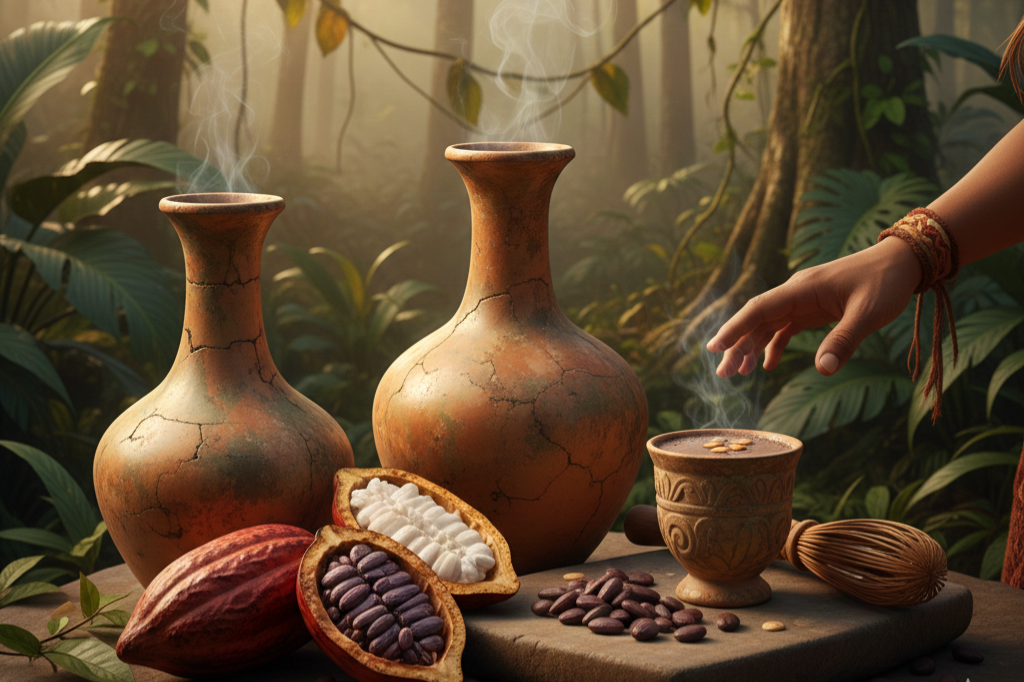
The rich, complex history of chocolate stretches back millennia, with new archaeological and scientific discoveries continually reshaping our understanding of its origins. While recent evidence points to South America for the earliest use of cacao, a landmark 2007 study definitively established Honduras as the site of the earliest confirmed cacao beverage preparation in Mesoamerica, pushing back the timeline by over 500 years. This revelation from the ancient village of Puerto Escondido offers profound insights into the cultural, economic, and culinary evolution of chocolate, cementing Honduras's pivotal role in its early development. This article delves into the robust evidence, the pioneering researchers, and the scientific methods that have illuminated Honduras's profound connection to the 'food of the gods.'
The 2007 PNAS Study: A Paradigm Shift for Mesoamerican Cacao
The earliest confirmed evidence of cacao beverage consumption in Mesoamerica dates back to 1400-1100 BCE, discovered at the site of Puerto Escondido in the lower Ulúa Valley of northern Honduras. This groundbreaking finding, published in the Proceedings of the National Academy of Sciences (PNAS) in 2007, significantly extended the known timeline for cacao use in the region. The study, led by John S. Henderson and Rosemary A. Joyce, analyzed residues from ancient pottery, revealing the sophisticated practices of early Mesoamerican cultures.
- Location: Puerto Escondido, situated in the lower Ulúa Valley, northern Honduras.
- Dates: The Ocotillo phase (1400-1100 BCE) yielded the earliest evidence, extending confirmed cacao use back over 500 years beyond previous estimates.
- Key Sample: Sample 4DK-136, a Barraca Brown bottle, provided the earliest definitive evidence of cacao use from anywhere in the world at the time of its discovery.
- Chemical Confirmation: 11 of 13 pottery sherds tested positive for theobromine and/or caffeine, key compounds found in cacao.
The Ocotillo phase at Puerto Escondido, Honduras, marks the earliest confirmed period for cacao beverage consumption in the region.
Source: Henderson et al., PNAS
The Evolution of Cacao Beverages: From Pulp to Seed
The research suggests that the earliest cacao beverages consumed at Puerto Escondido were likely produced by fermenting the sweet pulp surrounding the seeds. This alcoholic beverage, potentially containing up to 5% alcohol by volume, represents a primary use of the cacao fruit. The transformation to a beverage made from the more bitter cacao seeds, which we recognize as chocolate today, likely evolved as a secondary use of a byproduct. Changes in vessel forms over time, from long-necked pouring bottles (Ocotillo phase) to spouted, flaring-necked bottles (Middle Formative), further support this evolution, indicating a shift towards frothing chocolate drinks.
The Expert Team Behind the Discovery
The credibility and authority of the 2007 PNAS study are significantly bolstered by the expertise of its multidisciplinary team of researchers. Their combined archaeological, anthropological, and biomolecular analysis skills provided the robust evidence needed to rewrite cacao's history.
- John S. Henderson (Cornell University): Professor of Anthropology, lead archaeologist for the Puerto Escondido excavations. His extensive work in Mesoamerican archaeology provided the contextual framework for the findings. Henderson famously remarked, "My guess is, it all comes down to chocolate," regarding Puerto Escondido's 3,000-year occupation.
- Rosemary A. Joyce (UC Berkeley): Professor of Anthropology and Director of the Phoebe Hearst Museum of Anthropology. Her expertise in Honduran archaeology was crucial for interpreting the cultural significance of the cacao use.
- Patrick E. McGovern (Penn Museum): Scientific Director of the Biomolecular Archaeology Project, often dubbed "The Indiana Jones of Ancient Ales, Wines, and Extreme Beverages." McGovern's lab performed the critical chemical analyses, identifying theobromine residues. He noted that the results were "astounding—every vessel that he had chosen and was tested gave a positive signal for theobromine."
- W. Jeffrey Hurst (Hershey Foods Technical Center): Performed key LC-MS analyses, leveraging his specialized knowledge in food chemistry.
- Gretchen R. Hall (University of Pennsylvania Museum): Contributed to the scientific analysis through her work at MASCA (Museum Applied Science Center for Archaeology).
Theobromine: The Chemical Fingerprint of Cacao
At the heart of the scientific confirmation of ancient cacao use lies theobromine, a bitter alkaloid unique to Theobroma cacao in Central America. Its presence in archaeological residues serves as a definitive marker for cacao consumption, distinguishing it from other plant-based beverages. The research team employed advanced analytical techniques to detect this crucial compound.
- Chemical Name: 3,7-dimethylxanthine, with a molecular weight (m/z) of 181.
- Detection Methods: Primary identification utilized Liquid Chromatography-Mass Spectrometry (LC-MS), with Gas Chromatography-Mass Spectrometry (GC-MS) providing confirmatory results. UV chromatography and selected-ion monitoring (SIM) were also employed.
- Significance: Theobromine's unique chemical signature in the Central American context allowed researchers to unequivocally identify cacao residues, even from fragments of ancient pottery.
The Ulúa Valley: A Historic Hub for Cacao
The findings at Puerto Escondido are further supported by the Ulúa Valley's long-standing reputation as a prime cacao-growing region. Historical records from the 16th century, upon the arrival of the Spaniards, attest to the valley's fame for producing "high-quality cacao" that was considered the best in all of Mexico and Central America. This historical context reinforces the archaeological evidence, suggesting a continuous legacy of cacao cultivation and consumption in the region.
- Ideal Growing Conditions: The Ulúa Valley provided the ideal environment for cacao, requiring understory shade and rich soil, as noted by John S. Henderson in the Cornell Chronicle.
- Trade Gateway: The valley likely served as a crucial gateway for the introduction of cacao, which is native to South America, into Mexico and upper Central America.
- Ancient Trade Networks: Maya traders from the Yucatán peninsula specifically traveled to the Ulúa Valley to trade for cacao seeds, demonstrating its importance in pan-Mesoamerican commerce. Historical maps even showed overland routes to Honduras for this trade, highlighting figures like Çocamba, described as "a great merchant in cacao."
Connecting Honduras to Olmec Cacao Use
While the 2007 study focused on Honduras, subsequent research has also illuminated cacao use among the Olmec civilization. A 2011 PNAS study confirmed theobromine residues at San Lorenzo, a premier Olmec capital, dating cacao use there between 1800-1000 BCE. The earliest positive signature from San Lorenzo was even earlier, confirming use by 1800-1600 BCE.
The Honduran findings suggest that the development and spread of cacao culture were not a unidirectional influence from the Olmec Gulf Coast. Instead, the close relationship between Ocotillo-phase pottery from Puerto Escondido and vessels from the Pacific Coast regions of El Salvador, Guatemala, and Mexico indicates that the people of Puerto Escondido were already engaged in far-reaching networks of interaction, contributing to a broader, interconnected Mesoamerican cultural landscape where cacao played a significant role.
The Broader Cacao Story: Integrating Genetics and South American Origins
Our understanding of cacao's deep history continues to evolve. While Honduras holds the claim for the earliest Mesoamerican cacao beverages, genetic and archaeological studies have pushed the overall timeline of cacao use even further back, placing its origins firmly in South America.
- Earliest Global Use: A 2018 study in Nature Ecology & Evolution identified cacao use approximately 5,300 years ago in Ecuador's upper Amazon, based on starch grains, theobromine residues, and ancient DNA.
- Domestication Timeline: Population genomic analyses published in Communications Biology in 2018 suggest that the Criollo cacao population underwent domestication around 3,600 years ago.
- Genetic Origins: All wild relatives of domesticated Theobroma cacao are native to northern Amazonian South America, with the greatest genetic diversity found in the upper Amazon basin (Colombia/Ecuador border). Humans are believed to have spread Criollo cacao populations from South America to Central America.
Key Chronological Milestones in Cacao History
- ~5,300 years ago: Earliest cacao use identified in the upper Amazon, Ecuador (Zarrillo et al., 2018).
- 1800-1600 BCE: Earliest confirmed cacao use at San Lorenzo, Olmec capital (Powis et al., 2011).
- 1400-1100 BCE: Earliest cacao beverage preparation in Mesoamerica at Puerto Escondido, Honduras (Henderson et al., 2007).
- ~3,600 years ago: Genetic evidence suggests Criollo cacao domestication began around this period (Cornejo et al., 2018).
Institutional Support and Preservation
The invaluable artifacts and scientific analyses discussed here are supported by leading institutions dedicated to archaeology, anthropology, and cultural preservation. The original cacao-positive pottery specimens from Puerto Escondido are housed at the Museo de San Pedro Sula, under the care of the Instituto Hondureño de Antropología e Historia (IHAH). The biomolecular archaeology research, including the work of Dr. Patrick McGovern, continues at the University of Pennsylvania Museum of Archaeology and Anthropology.
Honduras' Enduring Legacy in the History of Chocolate
While the narrative of chocolate's origins is complex and spans continents, Honduras undeniably holds a crucial place as the "Cradle of Chocolate" for Mesoamerican beverage culture. The discoveries at Puerto Escondido highlight a vibrant, innovative society that was at the forefront of transforming cacao into a cherished drink, long before it captivated the rest of the world. This rich history continues to be explored and celebrated, offering a profound appreciation for the enduring legacy of chocolate.
- Pioneering Beverage: Honduras provides the earliest documented evidence of cacao beverages in Mesoamerica.
- Culinary Evolution: It showcases the critical transition from fermented cacao pulp drinks to seed-based chocolate beverages.
- Economic Hub: The Ulúa Valley was a renowned center for high-quality cacao production and trade for centuries.
- Cultural Gateway: Honduras served as a vital link for the spread of cacao from South America into wider Mesoamerican cultures.
For those interested in delving deeper, authoritative sources such as Smithsonian Magazine's "A Brief History of Chocolate" and National Geographic's coverage of chocolate's origins provide excellent overviews, often citing the Honduran discoveries as pivotal moments in this captivating story.


