
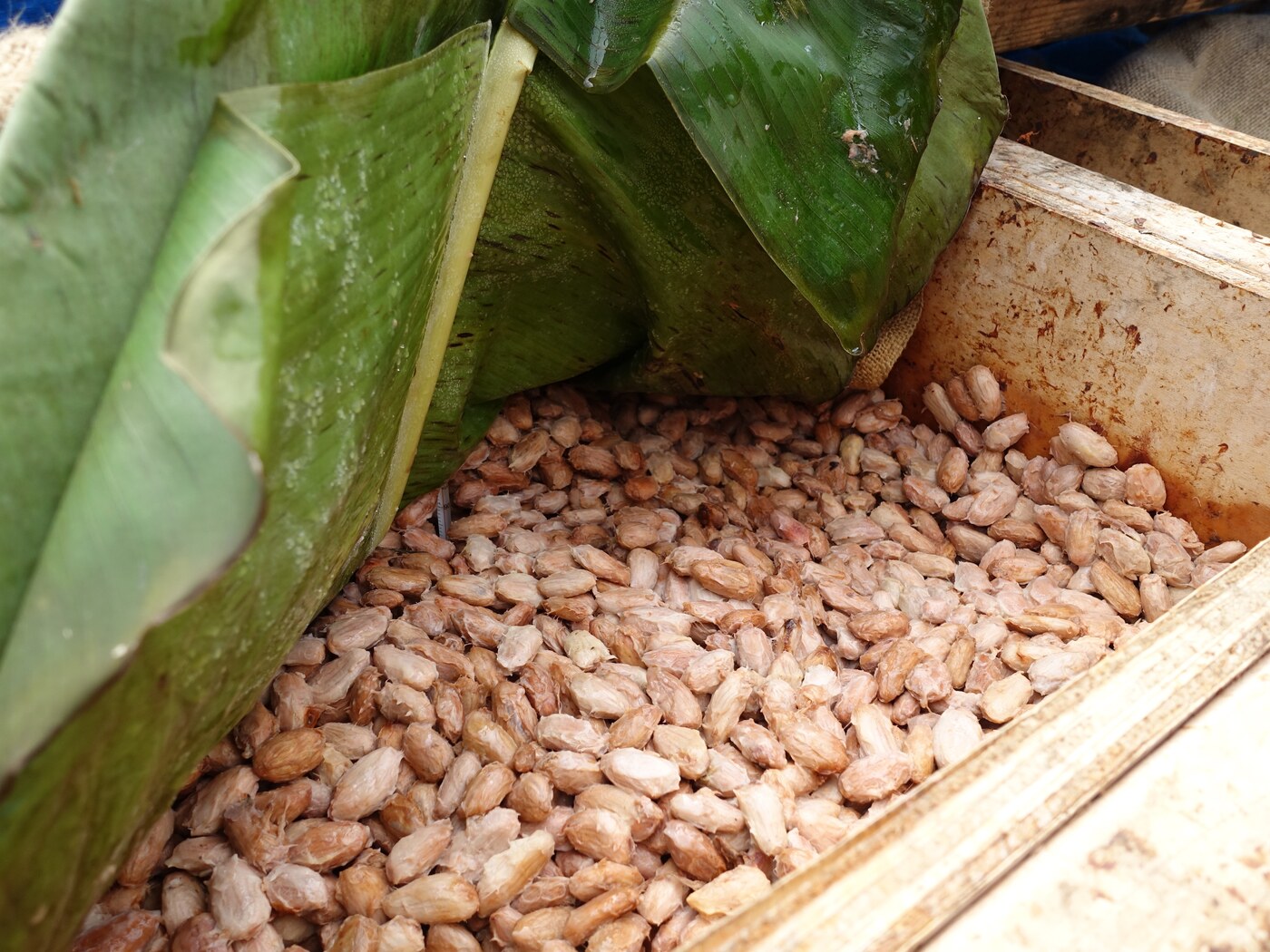
Open a ripe cacao pod and you do not find tiny chocolate bars waiting inside. You find seeds wrapped in sweet, wet pulp. The aroma is tropical. The beans themselves are bitter and astringent. The familiar depth we call chocolate is still waiting to be built.
That makes fermentation one of the most consequential handoffs in the entire fruit-to-bar process. Genetics and soil set the potential. Harvesting chooses the fruit. Fermentation decides how much of that potential survives into the dried bean.
Fresh cacao does not taste like finished chocolate
Fresh beans contain polyphenols and other compounds that can taste intensely bitter and drying. The pulp surrounding them is rich in water and fermentable sugars. Once the pod is opened and the wet beans are gathered, naturally present microorganisms begin working through that pulp.
A systematic review of spontaneous cacao fermentations describes three central effects: the pulp breaks down, volatile compounds form, and reactions begin inside the seed that reduce bitterness and create flavor precursors. Most cacao fermentation still happens spontaneously, using the organisms present on the fruit, equipment, hands, and surrounding environment. That variability is not a defect to hide. It is something skilled producers learn to manage.
What happens during cacao fermentation?
- Yeasts take the first shift
At the beginning, the wet mass has little oxygen. Yeasts consume sugars in the pulp and produce alcohol, carbon dioxide, and aromatic compounds. The pulp starts to loosen and drain. This stage can smell fruity, floral, or wine-like.
- Bacteria change the environment
As the mass is turned and oxygen enters, lactic acid bacteria and acetic acid bacteria become more active. Acids and heat build. The temperature can rise dramatically. Inside the beans, cell structures break down and enzymes gain access to proteins and sugars that will later participate in roasting reactions.
- The bean changes from the inside
Fermentation kills the seed and transforms its chemistry. Purple tones move toward brown. Harsh astringency softens. Amino acids, small peptides, and reducing sugars become available as flavor precursors. Roasting will later turn many of those precursors into nutty, cocoa-like, caramelized, fruity, and floral aromas.
- Drying stops the process and protects the work
Fermentation and drying are separate steps, but they are inseparable in quality. Drying lowers moisture so the beans can be stored and transported safely. Done too fast, too slow, or unevenly, it can flatten good fermentation or introduce off-flavors. A beautiful batch can still be lost after the box.

Why wooden boxes and banana leaves?
Wooden boxes make a fermenting mass easier to contain, monitor, drain, and turn. Their size and construction influence how the batch holds heat and receives oxygen. Banana leaves are often used as a local cover that helps retain warmth while protecting the mass. Neither is a magic ingredient. The result still depends on the fruit, batch size, weather, timing, turning schedule, drainage, and the producer reading the cacao in front of them.
There is no single universally correct number of days. Research commonly describes several-day fermentations, but the right endpoint depends on cacao genetics and conditions. Under-fermentation can leave aggressive bitterness and limited cocoa character. Over-fermentation can push acidity or unwanted aromas too far. A clock helps. The beans make the final argument.
Fermentation creates possibilities, not a finished flavor
It is tempting to say that fermentation creates chocolate flavor. More precisely, it creates and rearranges many of the compounds that make chocolate flavor possible. Roasting reveals them. Grinding, refining, conching, tempering, and recipe choices shape them again.
That is why two makers can start with the same origin and produce different bars, and why the same maker can taste meaningful changes between harvests. Origin is not a decorative label. It is genetics, weather, people, post-harvest decisions, and a chain of craft that remains visible in the final bite.
How Atucún approaches fermentation
Atucún works through producer partnerships, not anonymous commodity buying. In Honduras, fermentation happens close to the fruit and close to the people who know the harvest. We care about traceable lots, clean post-harvest work, and the kind of consistency that comes from attention rather than industrial flattening.
At Finca La Cumbre, Efraín López works with cacao grown above San Jerónimo in Comayagua. The farm, the harvest, wooden-box fermentation, and slow drying are not backstory added after the chocolate is made. They are part of the chocolate.
Cacao fermentation FAQ
Is chocolate fermented?
The finished bar is not fermented. Fresh cacao beans and their surrounding pulp are fermented after harvest, before drying, roasting, and chocolate making.
Does fermentation add alcohol to chocolate?
Yeasts produce alcohol early in fermentation, but it is converted and dissipates during later stages, drying, and roasting. A finished chocolate bar is not an alcoholic product.
Can cacao skip fermentation?
Beans can be dried without a full fermentation, but the resulting flavor is usually more astringent and less recognizably chocolate-like. Some makers deliberately explore minimally fermented cacao, but it is a different sensory target.
Do banana leaves flavor the beans?
Their main role is practical: covering and insulating the fermenting mass. The final flavor comes from the entire biological and chemical process, not from a simple banana-leaf infusion.
Go taste where the work started
A great bar carries a record of decisions made long before it reached the mold. Explore Atucún chocolate, meet our Honduran producers, or follow the complete journey from fruit to bar. Cacao, not candy.


