
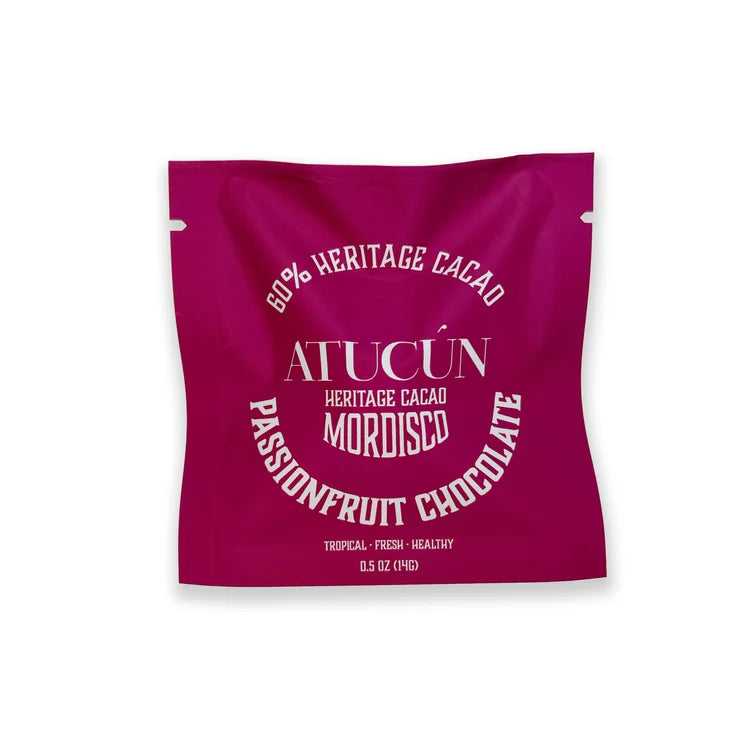
Walk down any chocolate aisle and the front of every bar shouts a number. 60. 70. 85. 92. The assumption baked into the whole format is that higher means better — better for you, more sophisticated, more real chocolate. That is almost true. It is also misleading enough that most people end up buying chocolate they do not actually enjoy because they think they are supposed to.
We make chocolate for a living, and we get this question more than almost any other: what cacao percentage should I look for? The honest answer is that the percentage tells you less than you think. Here is what it actually measures, what it does not, and how to use the number on the front to find chocolate you will actually love.
What Cacao Percentage Actually Measures
Cacao percentage is straightforward in theory. It is the share of the finished bar that comes from the cacao bean — usually a combination of cocoa mass (the ground roasted bean) and cocoa butter (the bean's natural fat). A 70% bar is 70% cacao components. The other 30% is whatever the maker added: sugar most often, sometimes milk solids in dark milk, occasionally lecithin or artificial vanilla in industrial bars.
That is the math. What the number does not tell you: where the cacao came from, how it was fermented, how it was roasted, what variety it is, or whether the non-cacao 30% is clean cane sugar or a stack of stabilizers. Two 70% bars sitting next to each other on a shelf can be entirely different products. Same percentage. Different food.
The Tier-by-Tier Breakdown
60–65% — The Gateway
Lower-percentage dark chocolate gets dismissed as not 'real' dark, which is wrong. A well-made 60% bar from clean, well-fermented cacao is one of the most balanced chocolates you can eat. There is enough sugar to round the cacao's natural acidity, enough cacao for real complexity, and almost none of the bitterness that scares people away from dark chocolate in the first place. This is where most newcomers should start.
Our 60% Honduran bar is two ingredients — single-origin cacao and organic cane sugar. People who tell us they do not like dark chocolate try this one and most of them change their mind. Not because we softened anything. Because they had never tasted dark chocolate that was actually made well. (See how it compares across our range in our complete guide to every Atucún bar.)
70% — The Classic
70% is the percentage most clinical studies use as a baseline when researchers talk about dark chocolate's antioxidant content. It is also where most craft makers put their flagship bar. There is enough cacao for real depth — dark fruit, roasted notes, sometimes spice — and enough sugar that the bar reads as chocolate rather than as a punishment. If you have enjoyed dark chocolate before but want to taste a clear step up from supermarket-grade, 70% from a craft maker is the move.
Our 70% Honduran bar is the same two ingredients as the 60%. Smooth and bold, layered notes of dark fruit and warm spice — the natural expression of single-origin cacao grown in the mountains of Comayagua and Wampusirpi by producers who have tended these trees for generations.
75–80% — The Depth Zone
This is where percentage starts to matter for flavor in a serious way. A 75–80% bar puts cacao front and center. Sugar drops to a supporting role. Bean quality and fermentation become impossible to hide; you are tasting the raw character of the cacao with very little to soften it. A great 80% is extraordinary. A poorly fermented 80% is unbearable. Brand and origin matter most in this tier — pick by maker first, percentage second.
85% — Minimal Sugar, Maximal Cacao
An 85% bar is mostly cacao. Some peer-reviewed research on dark chocolate has tested this percentage specifically because of how concentrated the polyphenols and flavanols are. For someone who already loves dark chocolate and wants to taste cacao with as little interference as possible — or who is intentionally reducing sugar — this is the tier to explore. (We dig into what actually makes a bar clean in our guide to the healthiest dark chocolate bars.)
A poorly fermented 85% will be brutal. A well-fermented one tastes like deep fruit, leather, roasted nuts, and earth. The percentage is identical. The maker is everything.
100% — Pure Cacao
100% bars are unsweetened. They are not for everyone and they should not be a casual buy. The point is to taste cacao at its most direct — which can be revelatory or punishing depending entirely on the bean. We recommend treating these as cooking chocolate or as a slow, contemplative tasting experience rather than as something you eat in handfuls. Even committed dark chocolate drinkers move slowly through 100%.
Why Two 70% Bars Can Taste Like Different Foods
Here is the part most percentage-focused articles skip entirely. The percentage tells you the proportion. It says nothing about the quality of what is in that proportion. Three things determine whether a 70% bar is extraordinary or unbearable.
- The cacao itself. Heirloom criollo and trinitario beans from the Comayagua mountains carry different flavor compounds than commodity cacao blended from a dozen anonymous origins. Same percentage on the wrapper, completely different bar in your mouth.
- The fermentation. Cacao develops most of its flavor not at the chocolate factory but at the farm — in the days after harvest, when beans ferment in wooden boxes or banana leaves. Underfermented cacao tastes flat. Overfermented cacao tastes off. Properly fermented cacao tastes like fruit, like spice, like place. Almost all the flavor potential is decided here, before the chocolate maker ever touches the beans.
- What is in the other 30%. Organic cane sugar is one experience. Sugar plus soy lecithin plus artificial vanilla is a different one. Both are 70% bars. Read the back of the wrapper, not just the front.
How to Pick the Right Percentage for You
Start with where you are. If you are new to dark chocolate, or you have tried supermarket-grade and decided dark was not for you, 60% from a craft maker is the right starting point. If you already enjoy dark chocolate, climb to 70 and 75. If you have worked your way up and want to taste cacao at its purest, explore 85 and beyond.
Do not chase percentage as a measure of seriousness. The chocolate you will actually eat — and savor, and come back to — is the chocolate that fits your palate. A great 65% bar is better food than a mediocre 90%. The number on the front is one input. The maker, the origin, and the ingredient list matter more.
How We Approach Percentage at Atucún
We work primarily in Honduras — the ancestral home of cacao, where the bean predates the Mayan civilization. Our bars are tree-to-bar, meaning we do not buy beans from a broker. The same hands that grow the cacao in named regions like Comayagua, Wampusirpi, El Paraíso, and Terrero Blanco harvest it, ferment it, and dry it before it travels to Grand Rapids for roasting and refining. Most of our bars are two ingredients: single-origin Honduran cacao and organic cane sugar. No lecithins. No artificial flavors. No shortcuts.
Our core bars span the tiers above — 60 and 70 for daily eating, plus origin-specific releases that explore higher percentages. Each bar is the same cacao tradition expressed at a different concentration. The percentage on the wrapper is honest. So is everything in the bar.
Frequently Asked Questions About Cacao Percentage
What does cacao percentage mean?
Cacao percentage is the share of a chocolate bar that comes from the cacao bean — the cocoa mass and cocoa butter combined. A 70% bar is 70% cacao and roughly 30% other ingredients, usually sugar. It describes proportion, not quality: it does not tell you the origin, the variety, how the beans were fermented, or whether the rest of the bar is clean cane sugar or industrial additives.
Is a higher cacao percentage better?
Not necessarily. Higher percentage means more cacao and less sugar, but it does not mean better-tasting or better-made chocolate. A well-fermented 65% bar from quality single-origin cacao is far more enjoyable than a poorly fermented 90%. Choose by maker and origin first, percentage second.
What is a good cacao percentage for beginners?
60–65% is the best starting point for most people. It carries real cacao complexity with enough natural sweetness to avoid the harsh bitterness people associate with cheap dark chocolate. From there, work upward to 70% and 75% as your palate adjusts.
What does 70% dark chocolate mean?
A 70% dark chocolate bar is 70% cacao components and about 30% sugar (in a clean bar). It is the most common flagship percentage for craft makers because it balances cacao depth with approachability — enough complexity to taste origin and fermentation, enough sugar to read clearly as chocolate.
The Short Version
Cacao percentage is a starting point, not the final word. It tells you the proportion of cacao in the bar. It does not tell you the quality of that cacao or the cleanliness of what surrounds it. Pick by maker and origin first, percentage second. The number on the front is meaningless without the story on the back.
If you are not sure where to begin, taste side by side. A mordisco sampler with different percentages from one origin is the fastest way to learn what you actually like — and it pairs perfectly with our four-step guide to tasting chocolate like a chocolatier. That is the moment most people stop guessing and start choosing chocolate they love.
Explore the Collection. Start with our 60% Honduran bar for an approachable introduction, our 70% bar for the classic profile, or build your own tasting bundle to compare percentages side by side.
Taste the land. Know the people. Experience the legacy.


