
I want to tell you about a moment that changed how I understood cacao.
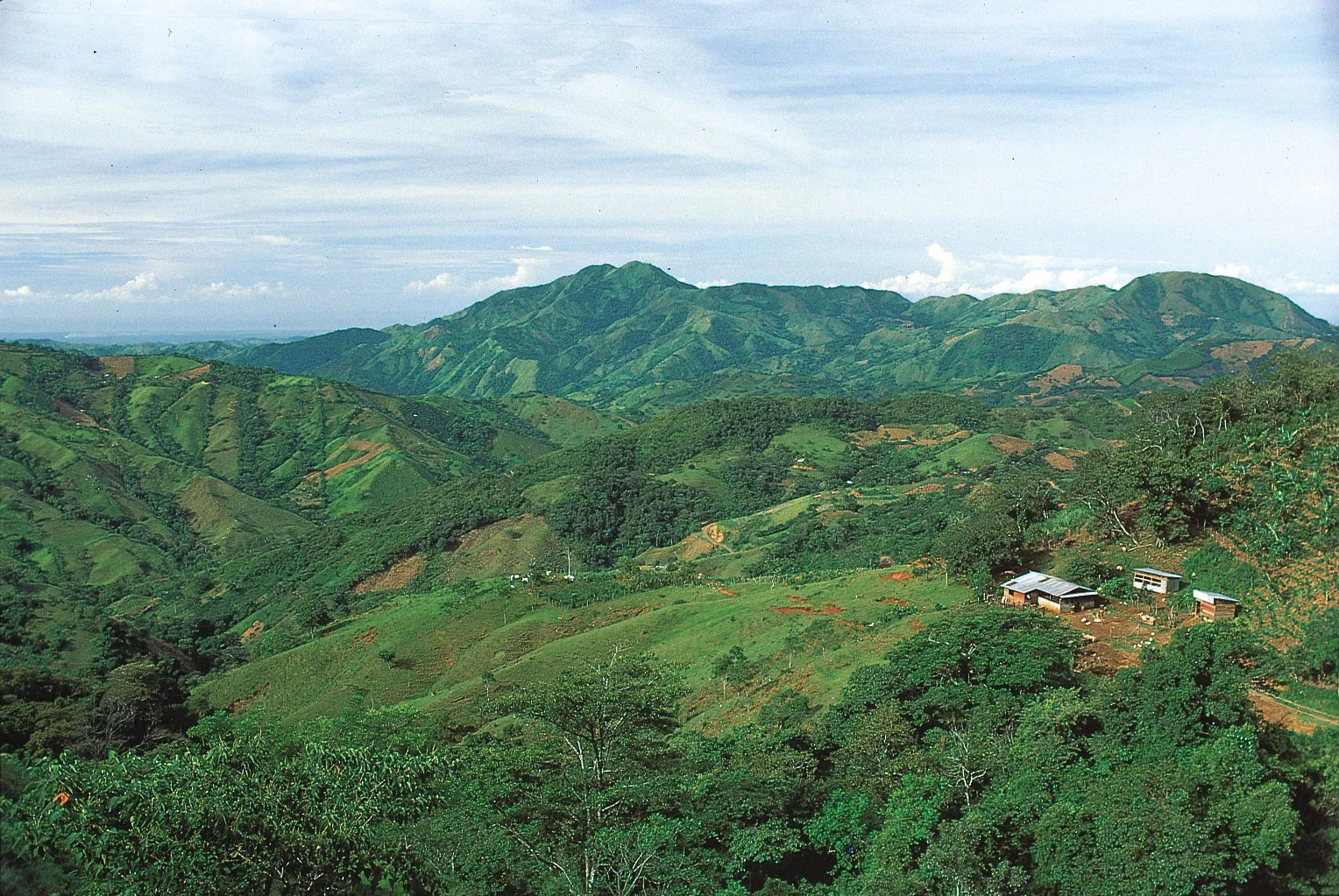
I was standing in a milpa de cacao in Comayagua — a traditional Honduran agroforestry system where cacao grows alongside companion crops: passionfruit vines climbing the shade trees, wild plantain growing at the edges, flowering plants that draw pollinators to the cacao pods. The air smelled of fermentation and earth. A farmer named Jaime Gabriel Canales Domínguez was walking me through his harvest, holding a cacao pod he had been growing for eight months.
That pod, and the decisions Jaime made in growing it, are the foundation of everything we do. This is what tree-to-bar chocolate actually means — not a slogan, but a chain of choices that starts in the soil.
Why Honduras
Honduras is cacao's ancestral homeland. This is not marketing language. It is botanical and archaeological fact: cacao was domesticated in this region of Mesoamerica thousands of years before European contact. The genetic diversity of Honduran cacao — criollo varieties, trinitario hybrids, and wild forastero relatives — is unmatched anywhere else on earth. (We tell that full origin story here.)
And yet Honduras has been almost entirely absent from the fine chocolate market. The specialty industry has centered on Madagascar, Ecuador, Venezuela, Peru. Honduras, despite its cacao heritage, shipped its beans into commodity supply chains and received commodity prices.
Atucún exists to change that.
The Four Origins
We work with four distinct growing regions within Honduras. They are not interchangeable. Each one produces single-origin cacao with its own flavor profile, shaped by elevation, rainfall, soil composition, and the specific varieties planted.
- Palmichal: Located in the mountains of Comayagua. Mountain elevation, cooler temperatures, and rich volcanic soil produce a cacao with bright acidity, stone fruit notes, and a lingering floral finish.
- Terrero Blanco: A valley-floor origin with deeper, earthier soil. Expect dark fruit complexity, a round body, and a warm, long finish.
- Clandestina: Our most rustic origin. Toasted cacao notes with savory undertones and a bold, assertive profile.
- Wampusirpi: Atlantic lowlands, on the border with the Mosquito Coast. Tropical fruit brightness, lighter body, and an immediacy that's unlike anything from the highlands.
Fermentation: Where Flavor Begins
Most people think of fermentation as a wine or beer concept. But fermentation is the single most important step in chocolate making — more important than roasting, more important than conching. Without proper fermentation, cacao beans produce flat, bitter, one-dimensional chocolate regardless of how skillfully they're processed afterward.
Fermentation is a biological process: the sugary pulp surrounding the cacao beans is colonized by wild yeasts and bacteria, generating heat and producing acids that penetrate the bean and initiate chemical changes that become flavor. The type of microorganisms present, the fermentation duration, the ambient temperature, the turning frequency — all of it shapes the final cup.
I oversee fermentation personally. I know what a properly fermented Palmichal batch smells like on day three versus day five. I know when to cut it. This is not something that can be learned from a manual.
The Journey from Tree to Bar
- Harvest: Ripe cacao pods are hand-selected and cut from the tree. Timing matters — under-ripe pods produce underdeveloped flavor.
- Breaking and pulping: Pods are opened and the beans, still surrounded by fruity white pulp, are extracted.
- Fermentation: Beans are placed in wooden boxes and fermented for five to seven days, with turning to ensure even fermentation.
- Drying: Fermented beans are dried in the Honduran sun on raised beds. Slow drying preserves flavor complexity.
- Export and arrival: Dried beans are bagged, documented, and shipped to Grand Rapids, Michigan.
- Roasting: We roast each origin differently — time, temperature, and airflow adjusted for the bean's characteristics.
- Winnowing, grinding, conching: The roasted nibs are cracked, husked, ground into liquid, and conched for days.
- Tempering and molding: The finished chocolate is tempered and poured into molds. Two ingredients. No shortcuts.
Want to taste the difference all of this makes? Our complete bar guide walks through every origin and percentage, and the mordisco sampler lets you compare four Honduran origins side by side.
An Invitation
When you hold an Atucún bar, you're holding the result of a year of decisions made in Honduran soil, Honduran sun, and Honduran tradition. Every bite is a celebration of the land, the growers, and the careful craft that brings this bar to life.
Explore the Collection at the Atucún shop. Taste the land. Know the people. Experience the legacy.


