Chocolate has more categories than most people realize. Dark, milk, white, ruby, couverture, cocoa powder, compound chocolate, single-origin bars, mordiscos. Some of those are types of chocolate. Some are formats. Some are sourcing or process terms. The confusion is understandable. The shelf does not always explain itself.
Dark Chocolate
Dark chocolate is built around cacao and sugar, without the milk ingredients that define milk chocolate. The higher the cacao percentage, the more of the bar comes from cacao components and the less room remains for sugar or other additions. But percentage is not a quality score. A balanced 60 or 70 percent bar from well-fermented cacao can taste fuller and more alive than a harsh 90 percent bar from anonymous beans.
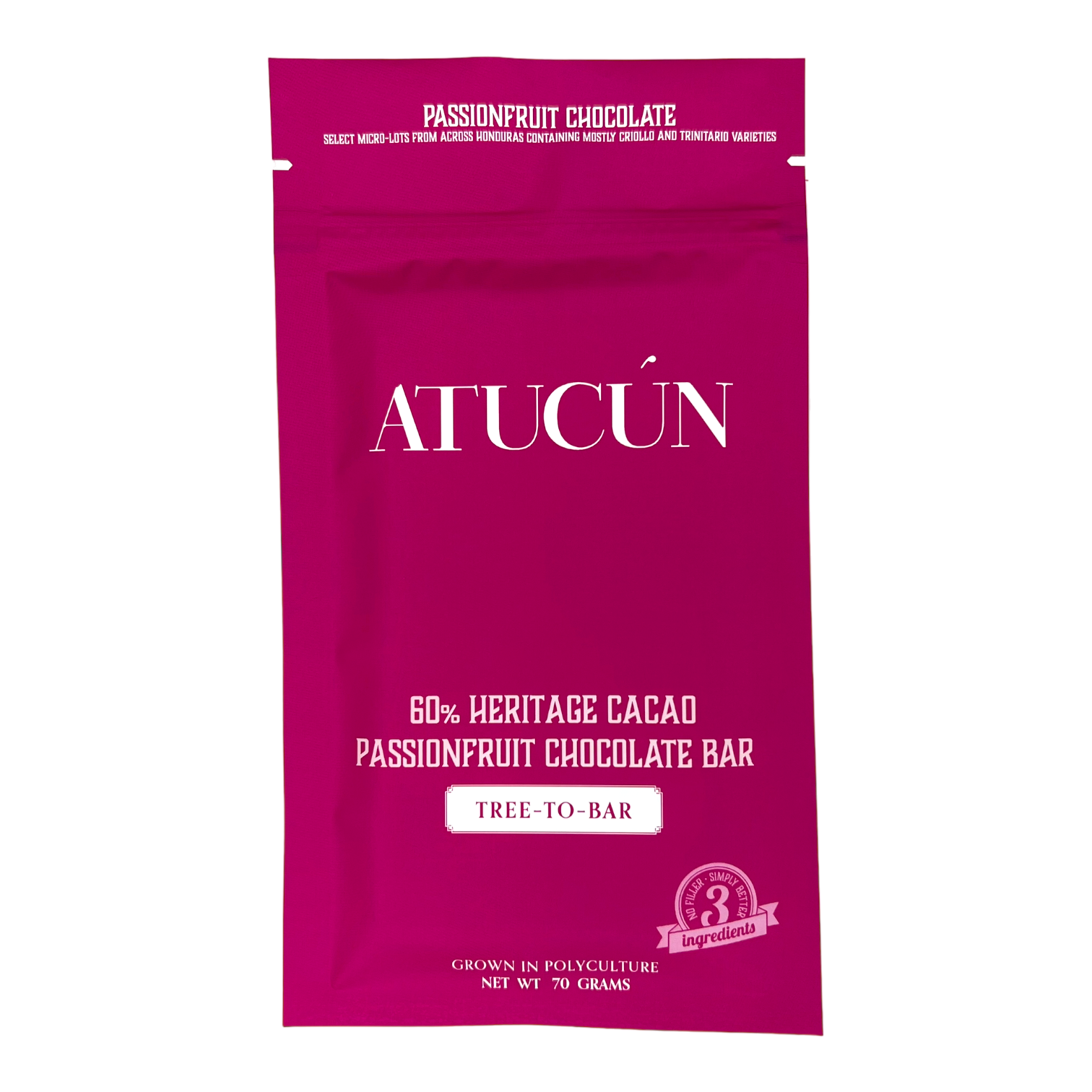
Atucún dark bars are where our tree-to-bar identity is clearest. Honduran cacao. Organic cane sugar. Named origins. No need to cover the flavor. The point is to taste the land and the fermentation, not a formula.
Milk Chocolate
Milk chocolate includes milk ingredients, which give it a softer body, lighter color, and creamy sweetness. Serious milk chocolate can still be made with excellent cacao. The mistake is thinking milk chocolate is automatically less thoughtful. It depends on the maker, the cacao, and the ingredient list.
Atucún makes milk chocolate for people who want the comfort of milk chocolate with a stronger connection to Honduran cacao. It is not vegan, and it should not be described as dairy-free. It is a different expression of the same origin-first philosophy.
White Chocolate
White chocolate is made with cocoa butter, sugar, and milk ingredients, but no cocoa solids. That is why it does not taste like dark or milk chocolate. It carries the fat of the cacao bean without the roasted cacao flavor. Some people argue about whether it counts as chocolate. The more useful question is whether it is made well. Good white chocolate should taste of cocoa butter, dairy, and balance, not just sugar.
Ruby Chocolate
Ruby chocolate is a newer category with a naturally pink color and a tart berry-like profile. It is made from specially processed cacao and has become common in confectionery and dessert work. It can be fun and visually striking, though it sits outside Atucún's core identity. Our work is rooted in Honduran cacao and the flavors that come from origin, fermentation, and minimal ingredients.
Couverture, Compound, and Cocoa Powder
Couverture is chocolate with enough cocoa butter to melt, temper, coat, and set beautifully. Pastry chefs and chocolatiers use it for dipping, molding, and enrobing. Compound chocolate is different. It uses vegetable fats instead of cocoa butter, which makes it easier to handle but less true to cacao. Cocoa powder is what remains when much of the cocoa butter has been pressed out of cacao mass. Natural cocoa powder tastes brighter and more acidic. Dutch-processed cocoa is alkalized for a darker color and milder flavor.
These categories matter in the kitchen, but they are not the same as choosing a bar to taste. A bar is about eating. Couverture is about performance. Cocoa powder is about baking and drinking. Compound is about convenience. The labels matter because the job is different.
Single-Origin Is About Place
Single-origin chocolate is not a separate type like dark or milk. It is a promise about sourcing. The cacao comes from one defined place: a country, region, farm, or producer group. That matters because cacao is agricultural. Soil, altitude, shade, rainfall, and fermentation all change flavor.
Atucún works with Honduran origins like Palmichal, Wampusirpi, Terrero Blanco, and Clandestina. Those names are not decorative. They are the reason two bars made with similar percentages can taste dramatically different. One may be bright and fruit-forward. Another may be earthy, warm, and deep.
Bean-to-Bar and Tree-to-Bar Are About Process
Bean-to-bar means the maker starts with cacao beans and makes the chocolate themselves: roasting, cracking, winnowing, grinding, conching, tempering, and molding. Tree-to-bar goes further. It means the maker is involved from the cacao tree itself, including growing relationships, harvest selection, fermentation, and drying. That is Atucún's world.
This distinction matters because fermentation is where much of chocolate flavor is created. A bean-to-bar maker inherits fermentation decisions. A tree-to-bar maker helps shape them. That is why our process language is not just branding. It changes the finished bar.
Mordiscos, Bars, Minis, and Chunks
These are formats, not chocolate types. A bar is the classic form. Minis make tasting and gifting easier. Chunks are for baking and cooking. Mordiscos are bite-sized tastings designed for comparison. Atucún uses mordiscos because fine chocolate makes more sense when you can taste several origins side by side.
If you are new to Atucún, begin with the shop. If you want to compare origins and styles, build a tasting journey with a bundle. The form you choose should match the moment: a full bar for slow tasting, chunks for baking, mordiscos for discovery, and gift boxes for sharing.
So How Many Types of Chocolate Are There?
The answer depends on what you mean by type. If you mean broad categories, four is the clean answer: dark, milk, white, and ruby. If you mean kitchen categories, add couverture, cocoa powder, and compound. If you mean how chocolate is sourced and made, add single-origin, bean-to-bar, and tree-to-bar. If you mean how it is served, add bars, minis, mordiscos, and chunks.
The better question is not how many types exist. It is which kind helps you taste more clearly. For us, the answer begins in Honduras, with cacao grown by people we know and chocolate made with enough restraint to let the origin speak.


